Why Your Louisville Roof Leak Might Actually Be a Chimney Problem
You spot water stains on your ceiling near the fireplace. Maybe you notice dampness in your attic right above where the chimney runs through.
Your first thought? "I need roof repair."
Here's the thing: you might not have a roof problem at all.
After 25+ years working on Louisville homes, our team has seen this scenario play out hundreds of times. Homeowners call us for what they think is a straightforward roof repair Louisville KY job, only to discover the real culprit is their chimney. The leak isn't coming from damaged shingles or worn underlayment. It's coming from deteriorating chimney components that most people never think to check.
Let's walk through why this happens so often and what you need to know about your chimney before you spend money on the wrong repair.
Why Chimneys Get Mistaken for Roof Leaks
Water damage near your chimney naturally points to the roof. After all, that's where rain hits first, right?
The reality is more complicated. Your chimney penetrates through your roof system, creating one of the most vulnerable spots on your entire house. Multiple materials meet at this junction: roofing shingles, metal flashing, brick or siding, mortar, and sometimes concrete crowns. Each of these components needs to work together to keep water out.
When any single element fails, water finds its way in. The moisture then travels down through your attic or along interior walls, creating stains and damage that look exactly like a roof leak. You're seeing the symptoms in the wrong place.
The Most Common Chimney Problems That Masquerade as Roof Leaks
Defective or Deteriorating Flashing
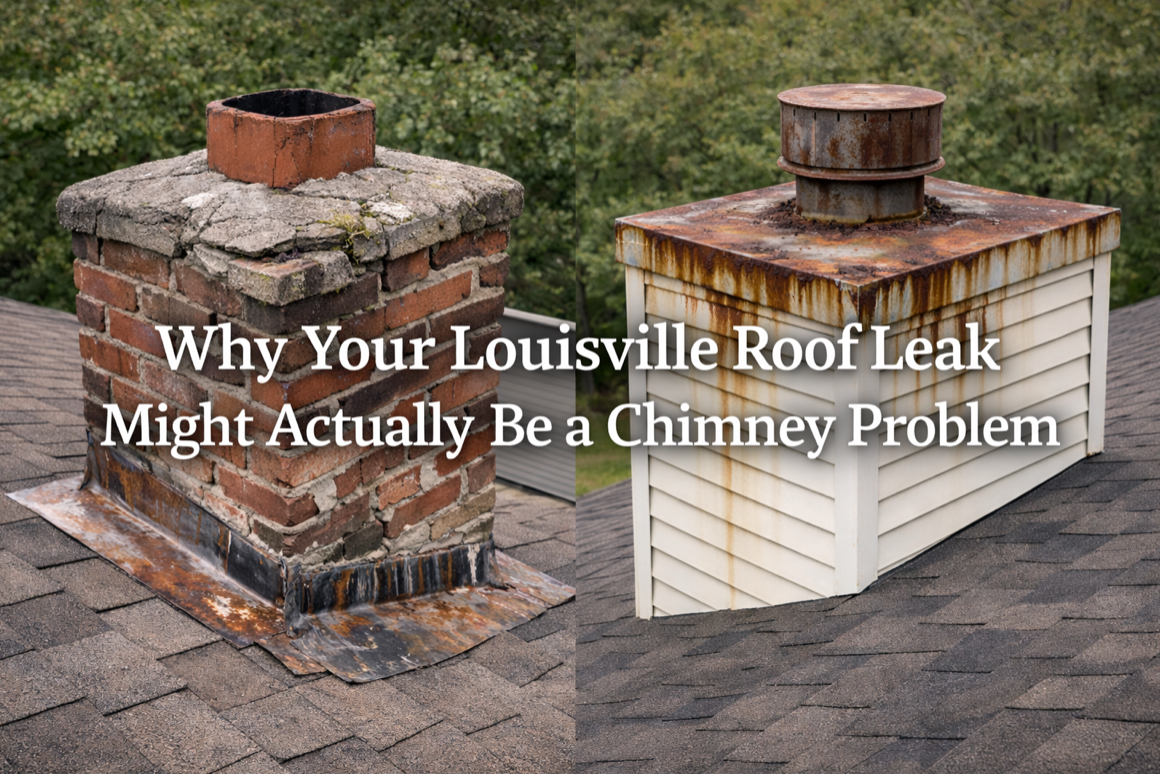
Chimney flashing is the metal material that seals the gap between your roof and chimney structure. It's typically installed in two layers: base flashing attached to the roof and counter flashing embedded into the chimney mortar joints.
This flashing takes a beating from Louisville's weather. Our temperature swings cause expansion and contraction. Heavy rain tests every seal.
Over time, several problems develop:
- Rust eats through older galvanized metal flashing
- Improper installation leaves gaps from day one
- Caulk or sealant breaks down and cracks
- Counter flashing pulls away from deteriorating mortar joints
- Missing sections leave entire areas exposed
When flashing fails, water pours straight into the gap between your roof deck and chimney. From there, it spreads throughout your attic insulation and eventually shows up as ceiling stains inside your home.
Cracked or Deteriorating Chimney Crowns
The chimney crown is that concrete or mortar cap at the very top of your chimney. It's designed to shed water away from the flue and chimney structure.
Louisville's freeze-thaw cycles are brutal on chimney crowns. Water seeps into tiny cracks, freezes, expands, and makes those cracks bigger. Within a few years, a small hairline crack becomes a major opening where water flows freely into your chimney system.
Once water gets past the crown, it saturates the brick and mortar. From there, it can travel in multiple directions: down through interior walls, sideways into your attic, or along the roof deck. You'll see the damage somewhere near your fireplace and assume it's a roof issue.
Rusted Out Chase Caps
If you have a prefabricated or metal chimney chase rather than traditional brick, you have a chase cap instead of a crown. These metal caps cover the top of the chase and direct water away from the flue.
Here's the problem: most chase caps are made from galvanized steel that rusts quickly in our humid Louisville climate. We've pulled off chase caps that were completely rusted through, with holes the size of your fist letting water pour directly into the chase.
This water then drips down onto your roof deck or seeps into the attic space, creating what looks like a textbook roof leak. But replacing shingles won't solve anything if the chase cap is shot.
Deteriorating Brick and Mortar Joints
Your chimney's brick and mortar face constant exposure to weather. Over decades, several things happen:
- Mortar joints crack and crumble through weathering
- Bricks develop tiny cracks that absorb water like sponges
- Freeze-thaw cycles cause spalling (when brick faces pop off)
- The entire masonry structure becomes porous
Once your chimney starts absorbing water, that moisture has to go somewhere. It migrates through the masonry and often ends up penetrating through your roof system or interior walls. The water stains you're seeing inside have nothing to do with your shingles.
Cracked Flue Tiles
Inside your chimney, clay flue tiles create a protective liner for the masonry. When these tiles crack: from age, settling, or extreme temperature changes: they allow moisture and combustion gases to penetrate the surrounding brick and mortar.
This moisture gets absorbed into the chimney structure and eventually finds its way to your living space. You won't see the cracked flue tiles from outside. You'll just notice water damage that appears near your chimney and assume you need Louisville roof repair.
Why This Happens So Often in Louisville
Our local climate creates perfect conditions for chimney deterioration. We get significant rainfall throughout the year: around 45 inches annually. Our temperature swings from below freezing in winter to the 90s in summer, creating constant expansion and contraction in masonry and metal components.
Louisville's humidity also accelerates rust formation on metal flashing and chase caps. Add in occasional ice and snow accumulation, and your chimney faces relentless stress that eventually causes failure.
Most homeowners don't inspect their chimneys regularly. You're checking your roof after storms, but when was the last time you looked at your chimney crown or flashing? These components fail gradually over years, not overnight. By the time you notice water damage inside, the chimney problem has been developing for quite a while.
How to Tell If It's Your Chimney or Your Roof
Location matters. If water stains appear on ceilings or walls near your chimney or fireplace, suspect the chimney first. If stains show up in other areas of your home, away from the chimney, you're more likely dealing with actual roof damage.
Timing can also provide clues. Leaks that happen during rain but not after snow might point to flashing problems. Water appearing during freeze-thaw cycles often indicates crown or masonry issues.
Check your attic if you can safely access it. Look at the area around where the chimney penetrates the roof. If you see water stains, rust marks, or moisture specifically in that zone, your chimney components are the likely source.
From outside, look at your chimney with binoculars. Can you see:
- Gaps or separation in the flashing
- Cracks in the crown or mortar joints
- Rust stains on metal components
- Missing or damaged bricks
- White staining on brick (efflorescence from moisture)
Any of these signs point to chimney problems rather than roof failure.
What You Should Do Next
Don't assume you need roof replacement or even roof repair Louisville KY services until you've had your chimney properly evaluated. A comprehensive inspection should examine:
- All flashing installations and seals
- Chimney crown or chase cap condition
- Mortar joint integrity
- Brick condition and any spalling
- Internal flue liner status
At Integrity Roofing & Construction, we inspect both your roof system and chimney components because we know how often they interact. Our team's 25+ years of experience working on Louisville homes has taught us to look at the complete picture, not just the obvious symptoms.
Sometimes you need chimney repairs. Sometimes you need roof work. Often, you need both. But starting with an accurate diagnosis saves you money and ensures the repairs actually solve your leak problem.
Protecting Your Investment
Once you've addressed existing chimney issues, regular maintenance prevents future problems. Have your chimney inspected annually, ideally before winter. Address small cracks and deterioration before they become major leak sources.
Quality flashing installation matters tremendously. If you need roof replacement, make sure your contractor uses proper chimney flashing techniques with appropriate materials. Cutting corners here leads to leaks within a few years.
For brick chimneys, consider waterproofing treatments that help repel moisture while allowing the masonry to breathe. These treatments extend the life of your mortar joints and reduce water absorption.
If you're seeing water damage near your chimney, don't wait. The longer moisture penetrates your home, the more extensive the damage becomes. What starts as stained drywall can progress to rotted framing, mold growth, and structural issues.
Get in touch with our team for a thorough inspection. We'll identify the real source of your leak and provide honest recommendations about what needs repair. Sometimes that means roof work. Sometimes it's chimney restoration. Either way, you'll know exactly what you're dealing with and how to fix it properly.
Your home deserves better than guesswork. Let's find out what's really causing that leak.