Gutter Guards Compared: Which Type Really Keeps Louisville Gutters Flowing?
If your gutters overflow during a storm, the problem may be more than an inconvenience. Water can damage fascia boards, stain siding, erode landscaping, and collect near your foundation. In some cases, overflowing gutters can even contribute to basement moisture and roof-related problems.
That makes gutter guards appealing for many homeowners across Louisville, Jefferson County, Oldham County, and Southern Indiana. Mature trees drop leaves, seeds, and twigs into gutters throughout the year. Heavy spring and summer thunderstorms can send large volumes of water down the roof at once, while winter ice and snow put additional stress on exposed gutter components.
But choosing the right gutter guard matters just as much as choosing to install one. Different designs manage water and debris in very different ways. Here is how the most common types compare: and why Integrity Roofing & Construction prefers the Raindrop Gutter Guard system for many Louisville-area homes.
What Should a Gutter Guard Do?
A well-designed gutter guard should accomplish two goals:
- Keep clog-forming debris out of the gutter
- Allow enough water to enter quickly during heavy rain
Those goals can sometimes conflict. A guard with very small openings may block more debris, but fine particles can collect on top. A guard with large openings may pass plenty of water, but leaves and seeds can enter the gutter.
Your roof pitch, gutter size, downspout layout, nearby trees, and local weather all affect performance. No guard can correct undersized gutters, poor slope, blocked downspouts, or damaged fascia. Professional evaluation is important before installation.
Comparing the Main Types of Gutter Guards
1. Basic Mesh and Screen Guards
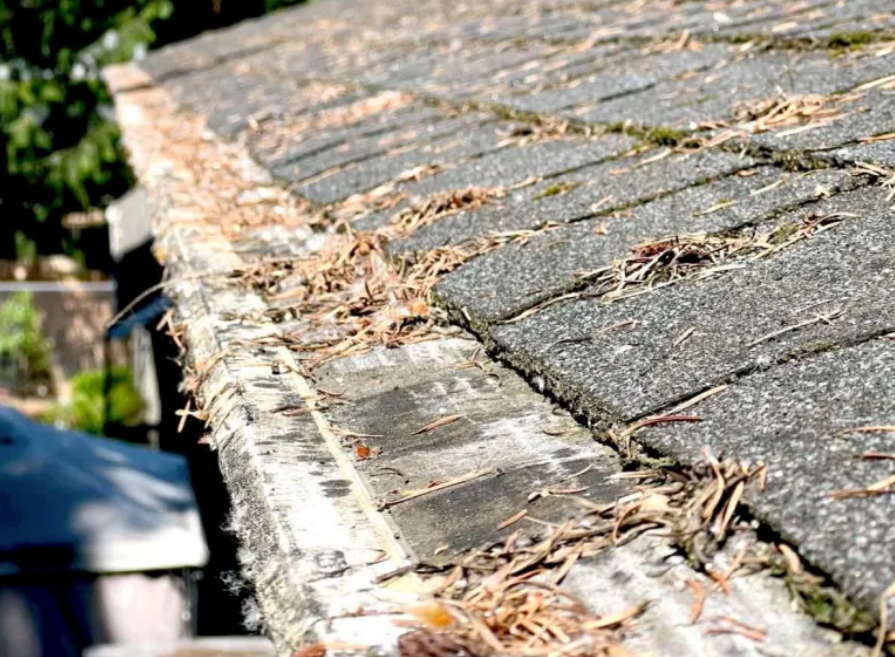
Basic screen guards are among the least expensive options. They typically use plastic or metal panels with relatively large openings that sit across the top of the gutter.
They can be useful for keeping out larger leaves and twigs, but they have several limitations:
- Small debris can pass through the openings
- Maple seeds, pine needles, pollen, and roof grit may collect inside the gutter
- Plastic screens can become brittle with prolonged sun exposure
- Some lightweight designs can bend, cave in, or shift under snow and ice
- Improper installation can leave gaps along the roofline or at seams
A basic screen may reduce how often you clean your gutters, but it rarely eliminates maintenance: especially if your home is surrounded by mature trees.
2. Brush and Foam Inserts
Brush guards sit inside the gutter and use bristles to catch leaves while allowing water to pass around them. Foam inserts work in a similar way, filling the gutter with a porous material that lets water move through.
These products are easy to install in many cases, but the debris does not disappear. It collects inside the bristles or pores, where it can be difficult to remove thoroughly.
Common concerns include:
- Leaves and organic matter becoming embedded in the material
- Foam absorbing or holding moisture
- Reduced water flow as dirt and debris build up
- Difficult cleaning, particularly in long gutter runs
- The need to remove sections to clean the gutter interior
Brush and foam inserts may work in homes with limited debris, but they are not always the best fit for a Louisville property with heavy leaf fall or frequent thunderstorms.
3. Micromesh Gutter Guards
Micromesh systems use very fine stainless steel mesh, often supported by an aluminum frame or another rigid structure. The small openings are designed to block fine debris such as pine needles, seeds, pollen, and shingle grit.
Micromesh can be highly effective when properly installed. It is also one of the most debris-exclusive designs available. However, that fine filtration creates a legitimate maintenance question.
The same small openings that block fine particles can also collect them. Over time, the surface may develop a layer of:
- Asphalt shingle granules
- Pollen
- Dust
- Dirt
- Fine organic particles
- Mold or other surface buildup in damp conditions
When that film begins to restrict the mesh, water may slow down or flow over the guard rather than through it. Some high-end micromesh systems still require periodic brushing, rinsing, or professional cleaning. In certain installations, panels may need to be lifted or removed to access the gutter and clean the mesh properly.
That does not mean every micromesh product fails. It means you should ask specific questions before buying:
- What happens when fine sediment builds up on the mesh?
- How often should the surface be cleaned?
- Can the system be cleaned from the ground?
- Will panels need to be removed for maintenance?
- What does the warranty cover if the mesh becomes restricted?
A “maintenance-free” label should not prevent you from asking how the product performs after years of exposure to Louisville’s dirt, pollen, and roof runoff.
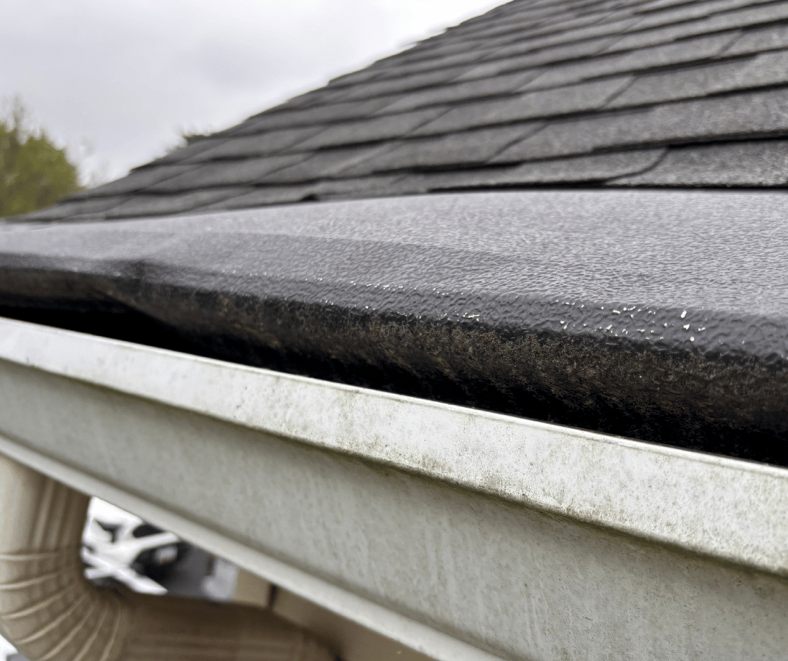
Solid Hood and Helmet-Style Covers: Where Do They Struggle?
Solid hood or helmet-style systems use a curved cover over the gutter. The design relies on surface tension and water adhesion. In theory, rainwater follows the curved surface around the edge and drops into the gutter while leaves slide off.
These systems can work well under many conditions, but their performance depends heavily on roof design, installation, and rainfall intensity.
Heavy Rain and Steeper Roofs
During a light or moderate rain, water may follow the curved hood as intended. During a Louisville summer downpour, however, much more water can arrive at a much higher speed.
On a steeper roof, water gains additional velocity as it travels toward the gutter. When that fast-moving water reaches the hood, its adhesion to the curved surface can break. Instead of following the curve into the gutter, water may overshoot the front edge or run down the outside of the cover.
Independent product testing has raised similar concerns about reverse-curve systems overflowing more readily during intense downpours than some other designs. That does not mean every solid hood is guaranteed to overflow. It means performance is especially sensitive to:
- Roof pitch
- Roof length
- Gutter placement
- Inside corners and valleys
- Rainfall intensity
- The angle and condition of the hood
Dents Can Change the Water Path
A solid hood depends on a consistent curved surface. If the hood is dented by hail, a falling branch, ladder contact, or another impact, that curve can be compromised.
A dent or deformation may cause water to:
- Break away from the intended flow path
- Overshoot the gutter
- Run down the front of the system
- Pool on top of the cover
- Carry debris into gaps or seams
Installation gaps and debris buildup on top of the hood can create additional failure points. If you are considering a hood-style system, ask how the company handles impact damage and whether the warranty covers water overflow caused by dents or installation problems.
Why Integrity Recommends Raindrop Gutter Guards
For many Louisville-area homes, we prefer Raindrop Gutter Guards because the system addresses several of the concerns homeowners should consider when comparing guard designs.
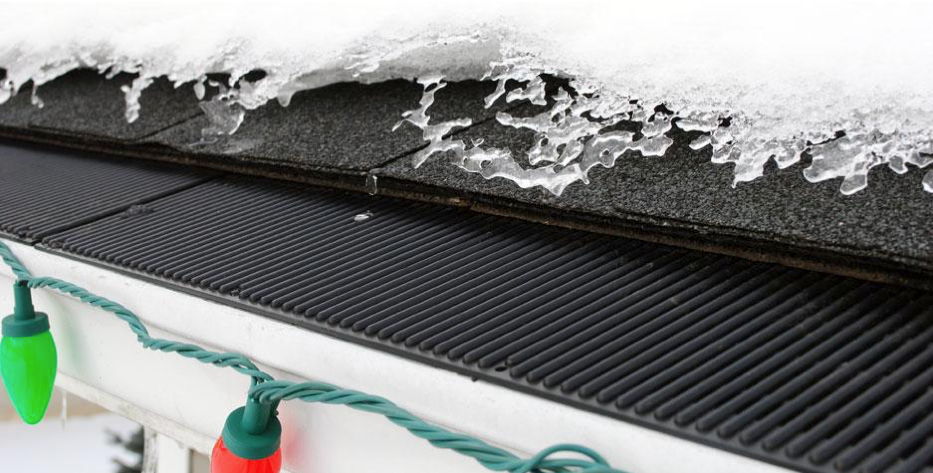
Raindrop is made from a commercial-grade polypropylene blend with UV stabilizers. Unlike thin plastic screens, the material is designed for outdoor exposure and provides a rigid, damage-resistant surface. Its structure is not dependent on a thin metal hood maintaining a perfect curve, so ordinary dents are less of a concern.
The system also uses a surface-flow design that directs water into the gutter while allowing larger debris to shed away. According to the manufacturer, Raindrop is designed to let fine, non-clogging material such as roof grit move through with the water while keeping leaves and other clog-forming debris out.
That approach offers several practical benefits:
- Strong water handling during heavy rainfall
- A rigid design that resists damage
- No fine mesh surface to form a dirt film
- Leaves and twigs can sweep off the top
- Low-maintenance performance compared with many inserts and fine screens
- Compatibility with many existing gutter systems
Raindrop is not a magic solution, and no gutter guard eliminates every inspection or maintenance need. Pine needles, maple seeds, and unusual roof conditions may require special attention. Downspouts must remain clear, and existing gutters should be repaired or replaced when they are sagging, leaking, or undersized.
The quality of the installation also matters. A properly fitted system must account for roof pitch, gutter condition, corners, valleys, downspout outlets, and water volume. That is where professional experience makes a difference.
Which Gutter Guard Is Right for Your Home?
Use these questions to guide your decision:
- Do you have mostly large leaves and twigs?
A properly installed screen or Raindrop system may be suitable, with Raindrop offering a more durable, low-maintenance design. - Do you have pine needles, pollen, or fine seed debris?
Micromesh may block more of that material, but you should understand its cleaning requirements. Raindrop can be a better fit if your primary concern is maintaining water flow without a fine mesh surface. - Does your home have a steep roof or long roof runs?
Ask how the system handles high-velocity water during intense storms. Be especially cautious about relying on a solid hood without discussing overshoot risk and installation details. - Are your gutters already damaged or undersized?
Repair or replacement may be necessary before adding any guard. A gutter guard cannot increase the capacity of a failing system. - What does the warranty actually cover?
Look for clear information about materials, installation, clogs, overflow, and damage.
Get a Professional Gutter Assessment
The right gutter guard depends on your home: not just the product name. At Integrity Roofing & Construction, we evaluate your gutters, roof pitch, downspouts, surrounding trees, and likely water volume before recommending a system.
With 27+ years of industry experience, our team provides professional gutter installation and Raindrop Gutter Guard installation for homeowners throughout the Greater Louisville area and Southern Indiana.
Request a free gutter assessment to find out whether your current gutters need cleaning, repair, replacement, or added protection.
Serving Louisville and Southern Indiana